
Behind the comfort of an office building, shopping mall, or industrial facility lies a complex system working tirelessly to ensure fresh air and stable temperatures. This system is known as HVAC. However, with rising energy costs and increasing environmental awareness, simply having an HVAC system is no longer enough. An optimization system is required to ensure maximum performance with minimal costs.
What is HVAC?
For those wondering what is HVAC or what is an HVAC system, the answer lies in its acronym: Heating, Ventilation, and Air Conditioning.
In simple terms, it is the technology used to regulate temperature, air circulation, and humidity within a room. It consists of three main components:
- Heating: Maintaining warmth in cold environments.
- Ventilation: Replacing indoor air with outdoor air to maintain oxygen quality and remove pollutants or odors.
- Air Conditioning: Lowering temperatures and regulating humidity to keep the room cool and comfortable.
Why Does HVAC Need to be Optimized?
Even when an HVAC system is installed, problems often arise if it is managed manually or left to run without intelligent supervision. Common challenges include:
- Energy Waste: HVAC systems often consume up to 40-50% of a building's total electricity usage.
- Uneven Temperatures: Some corners of a room may feel too cold, while others remain warm.
- Monitoring Difficulties: Minor malfunctions often go undetected until the system suffers a total breakdown.
This is why system optimization is crucial for maintaining stable energy efficiency and occupant comfort.
What is HVAC Optimization?
HVAC Optimization is the process of improving system performance through the integration of sensor technology, real-time monitoring, and automated controls.
Rather than just replacing old units with new ones, optimization focuses on how the system operates. The goal is to ensure each unit runs only when needed and at its most efficient capacity, thereby preventing premature damage and significantly saving operational costs.
HVAC Optimization Solutions from Ferbos
Ferbos provides smart solutions that integrate high-precision hardware with automated controls to address modern building air management challenges:
1. 24/7 & Real-Time Monitoring
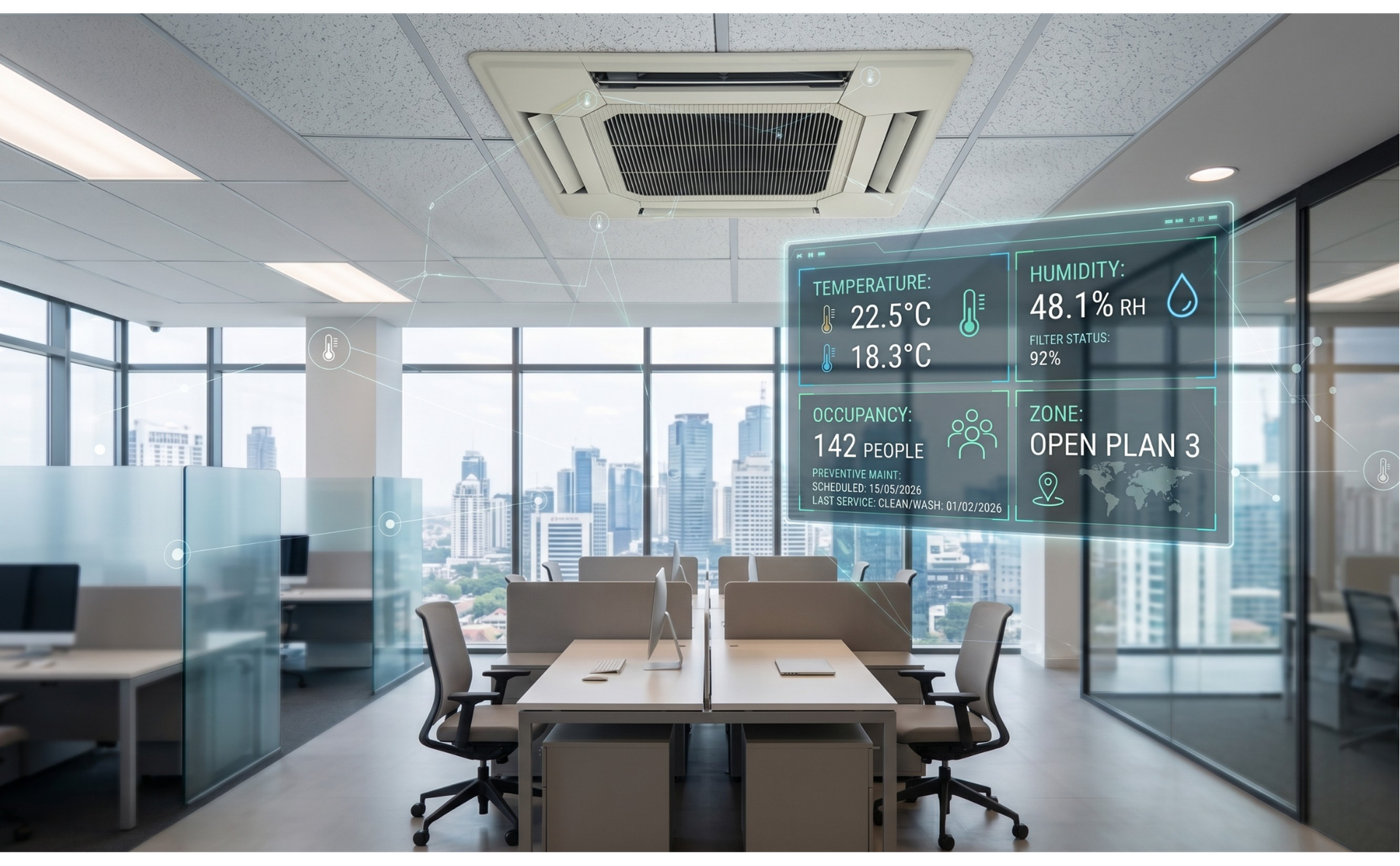
HVAC performance and environmental conditions are monitored around the clock via a digital dashboard. You can view temperature and humidity data in real-time without needing to conduct manual field inspections.
2. Occupancy-Based Automated Control
The Ferbos system works dynamically based on room activity:
- When the room is empty: The system maintains the temperature at an efficient level (e.g., 24°C) to save electricity.
- When people enter: Sensors detect presence and cooling load, then gradually lower the AC temperature to the optimal comfort point.
3. High Precision & Environmental Control
This automated adjustment is supported by industrial-grade precision sensors:
- Temperature Accuracy: Up to ±0.3°C (with an extreme measurement range of -40°C to 125°C).
- Humidity Accuracy: Up to ±3% RH (range of 0-100% RH).
This ensures that AC adjustments are highly accurate according to the desired target temperature.
4. Integration with Preventive Maintenance
Beyond digital monitoring, the Ferbos system acts as an Early Warning System for physical maintenance.
- Predictive Alerts: The system can detect anomalies, such as a "struggling" compressor or refrigerant leaks, before a total failure occurs.
- Cleaning Schedules: By monitoring cooling efficiency, the system recommends when an AC unit actually needs cleaning (AC wash) based on performance data, rather than just using a fixed calendar schedule. This ensures the unit doesn't "work too hard" due to dust buildup, which otherwise wastes energy.
5. Maximum Energy Efficiency
Through precise control logic working at maximum capacity only when needed and maintaining stability when empty you can drastically reduce unnecessary electricity usage without sacrificing occupant comfort.
Conclusion
Understanding what HVAC is is the first step toward proper building management. However, to meet future energy cost challenges, transitioning to HVAC Optimization is a necessity. With Ferbos technology and data-driven maintenance, your building will not only feel more comfortable but also become significantly more financially efficient.