
Modern buildings rely on many systems to keep operations running, from HVAC and lighting to energy meters, sensors, and Building Management Systems (BMS). The challenge is that these systems often come from different vendors and operate separately.
When data is fragmented, building teams may need to check several platforms to understand what is happening across the facility. This can make monitoring more complicated and limit visibility into operational performance.
Building integration offers a way to connect these systems and bring their information into a more centralized operational environment, without necessarily replacing the infrastructure already in place.
What Is Building Integration?
Building integration is the process of connecting different building systems, equipment, controls, and data sources so they can communicate within a connected operational environment.
The goal is not to replace every existing system. Instead, an integration layer acts as a bridge between different technologies, allowing information from multiple sources to be collected and viewed more consistently.
For example, HVAC performance can be reviewed alongside energy consumption, temperature, or occupancy data. This gives operators more context when monitoring building conditions.
This approach is particularly useful for existing buildings where replacing every installed system may not be practical.
Which Building Systems Can Be Integrated?
A building integration solution can connect different systems depending on the building's infrastructure and operational requirements.
Common examples include:
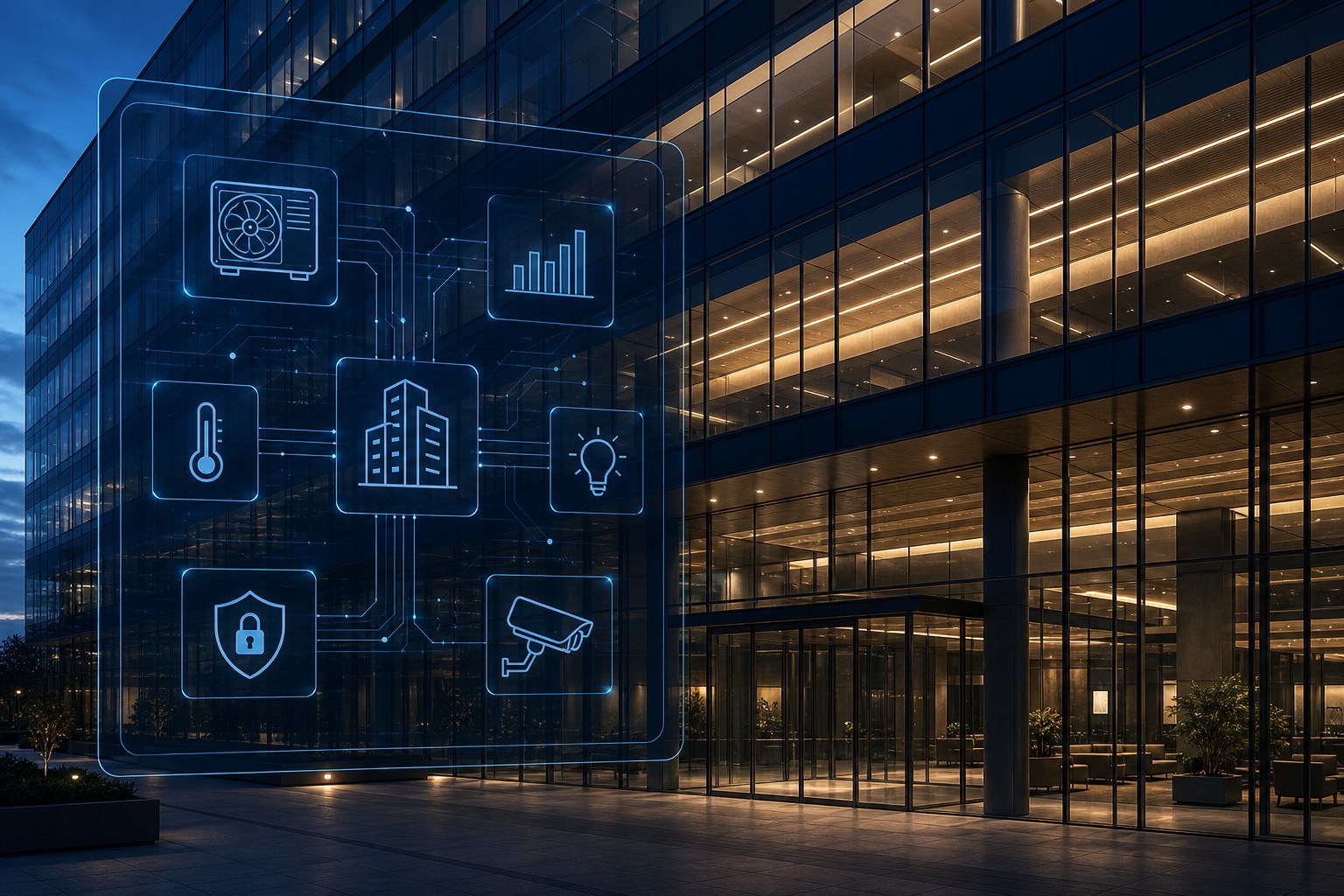
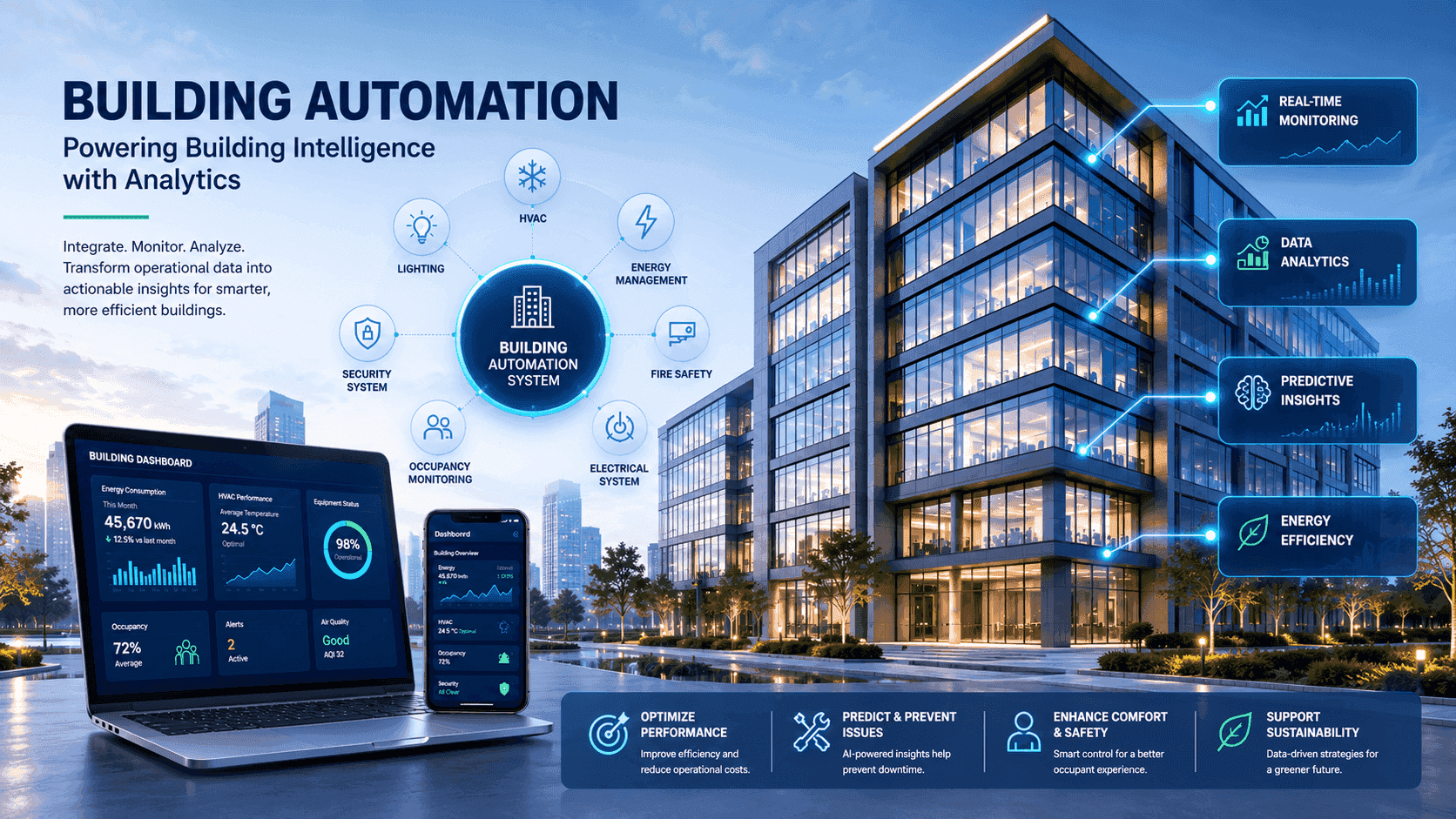
- HVAC systems for monitoring equipment status, runtime, and operating conditions.
- Lighting systems for managing schedules, occupancy-based controls, and lighting usage.
- Energy monitoring for understanding electricity consumption and identifying unusual patterns.
- BMS and smart sensors for collecting temperature, humidity, occupancy, and other building data.
- Third-party and multi-vendor systems that need to exchange information within one operational environment.
The exact scope depends on the equipment, interfaces, and connectivity available in the building.
How Does Building Integration Work?
A simple integration flow can be represented as:
Existing Systems → Integration Layer → Operational Platform → Centralized Visibility
Data is collected from systems already operating in the building. The integration layer then connects these sources with an operational platform.
Communication protocols such as BACnet and Modbus can support communication between compatible equipment and systems. Depending on the existing infrastructure, gateways or other interfaces may also be required.
Once connected, information from HVAC, lighting, energy monitoring, sensors, and other systems can be viewed within a more centralized environment.
Instead of checking each system separately, operators gain a broader view of building operations.
Benefits of a Building Integration Solution
The value of building integration is not simply collecting more data. It is about making existing information easier to understand and use.
Monitor Multiple Systems from One Platform
A centralized platform can reduce the need to move between different interfaces when checking building conditions.
Improve Operational Visibility
Connected data provides more context. For example, energy consumption can be reviewed alongside HVAC runtime, temperature, or occupancy.
Support Energy Optimization
When energy data is connected with systems that influence consumption, teams can identify unusual patterns, unnecessary runtime, or areas that require further investigation.
Integration itself does not guarantee energy savings. Actual results depend on equipment conditions and the actions taken based on the available information.
Support Maintenance
Centralized equipment information can help maintenance teams identify changes in operating conditions and determine which assets may require attention.
Maximize Existing Infrastructure
One advantage of building integration is that existing systems can remain useful where technically feasible. A building does not necessarily need to replace its BMS, meters, sensors, or controls to improve connectivity.
How to Choose the Right Building Integration Solution
The right building integration solution should be based on the building's existing infrastructure and operational priorities.
Consider:
- Compatibility with existing equipment, vendors, interfaces, and protocols.
- Scalability for adding systems, sensors, or equipment in the future.
- Open technology to avoid unnecessary vendor lock-in.
- Existing infrastructure so functional systems can continue to be used.
- Operational insights that go beyond simply displaying data.
A flexible solution should adapt to the building rather than forcing the building to replace everything it already has.
Building Integration for Existing Buildings
Building integration does not have to be a large, one-time replacement project.
For an operating building, the process can start by mapping existing systems, identifying fragmented data, and prioritizing the connections that can provide the greatest operational value.
Additional equipment and systems can then be connected gradually as requirements change.
This creates a practical path toward more connected building operations while making better use of existing infrastructure.
From Separate Systems to Connected Operations
A smart building is not simply a building with more sensors or digital equipment. The bigger opportunity is making those systems work together.
Building integration connects information that would otherwise remain separated, helping building teams gain clearer visibility into equipment, energy, and operational conditions.
This is also the broader principle behind smart building solutions: using connected data to support monitoring, optimization, and better operational decisions.
Ferbos approaches building operations by integrating energy, automation, and digital intelligence into a connected environment, with solutions designed around different building needs.
FAQ
What is building integration?
Building integration connects different building systems, equipment, and data sources so information can be exchanged and accessed through a connected operational environment.
What is the difference between BMS and building integration?
A BMS generally monitors and controls specific building systems. Building integration has a broader scope because it can connect a BMS with lighting, energy meters, sensors, and systems from different vendors.
Can systems from different vendors be integrated?
Yes, depending on available interfaces, communication protocols, and equipment compatibility.
Does building integration require replacing existing systems?
Not necessarily. A building integration solution can often work with existing infrastructure when the systems support the required connectivity.
How can building integration support energy efficiency?
Connecting energy data with HVAC, lighting, occupancy, and other operational data can help teams identify consumption patterns and potential areas for optimization.
Can building integration be applied to an operating building?
Yes. Building integration can be implemented gradually, starting with priority systems and expanding as operational requirements evolve