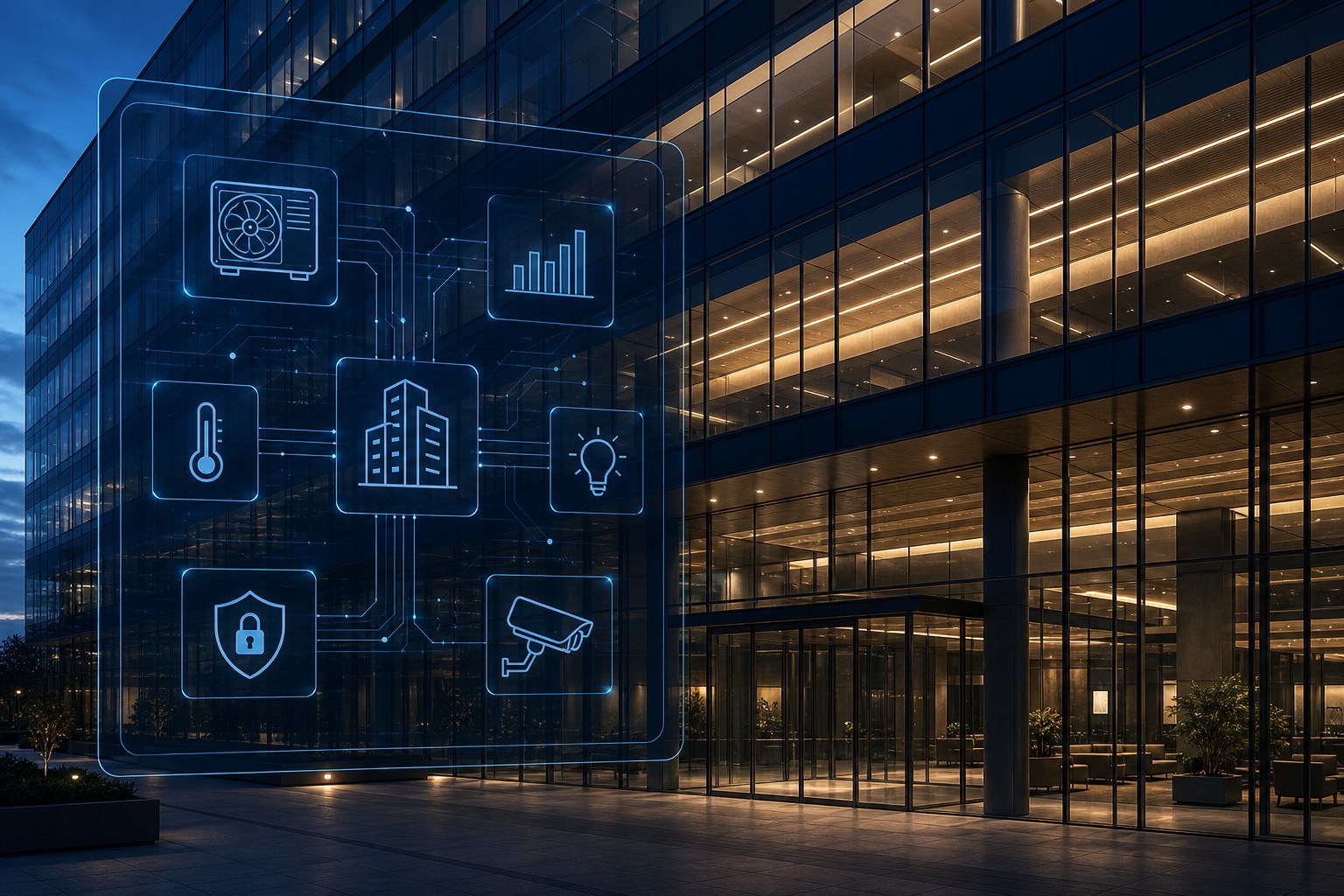

Why Environmental Monitoring Is Essential for Modern Operations
As digital transformation reshapes modern industries, ensuring stable environmental conditions has become a key priority for operational success. From commercial buildings and manufacturing facilities to hospitals and data centers, organizations rely on accurate environmental data to ensure operational efficiency, safety, and compliance.
This is where environmental monitoring plays a critical role. By using dependable environmental sensors along with a complete environmental monitoring system, companies can keep track of environmental conditions all the time, spot issues quickly, and make smart decisions using precise data.
What Is Environmental Monitoring?
Environmental monitoring is the process of continuously measuring environmental conditions using sensors and digital monitoring technologies. The collected data helps organizations maintain safe, stable, and efficient operating environments while supporting compliance with operational standards.
Environmental monitoring is widely used across various industries, including:
- Commercial buildings
- Manufacturing facilities
- Hospitals
- Laboratories
- Data centers
- Warehouses and storage facilities
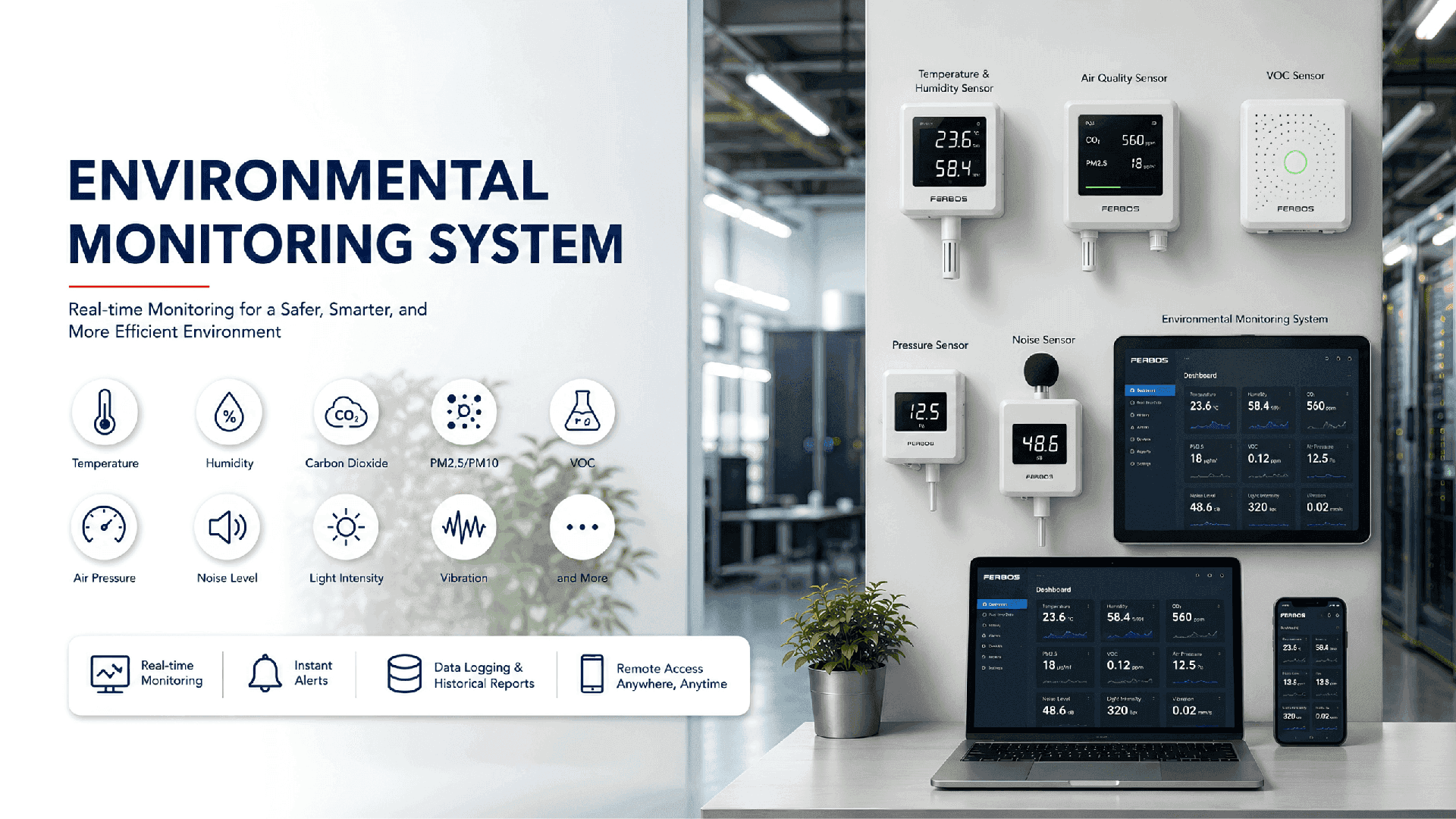
Common environmental parameters include:
- Temperature
- Humidity
- Air quality (CO₂, PM2.5, PM10, and VOC)
- Air pressure
- Noise levels
With continuous monitoring, organizations gain better visibility into their facilities and can respond quickly whenever environmental conditions fall outside acceptable limits.
Common Types of Environmental Monitoring Sensors
The effectiveness of any monitoring solution depends on the quality of its environmental monitoring sensors. Selecting the right sensors ensures accurate measurements and reliable long-term performance.
Some of the most commonly used sensors include:
- Temperature and humidity sensors to maintain stable conditions in laboratories, warehouses, pharmaceutical storage, and data centers.
- Air quality sensors that monitor CO₂, PM2.5, PM10, and VOC levels to improve indoor air quality.
- Pressure sensors are used in hospitals, labs, and cleanrooms where keeping the right pressure is very important.
- Noise sensors that help monitor sound levels in industrial environments to support workplace safety.
When selecting sensors, organizations should consider measurement accuracy, durability, calibration requirements, and compatibility with their monitoring platform.
How Does an Environmental Monitoring System Work?
An environmental monitoring system connects multiple sensors to a centralized platform that collects, analyzes, and displays environmental data in real time.
The system usually works by following four main steps:
1. Data Collection
Environmental monitoring sensors continuously measure environmental conditions throughout the facility.
2. Data Transmission
The collected data is transmitted to the monitoring platform through communication protocols such as Ethernet, Wi-Fi, Modbus, or other industrial communication networks.
3. Real-Time Dashboard
The system displays live environmental data through an intuitive dashboard, allowing users to monitor trends, historical records, and device status from a single interface.
4. Automated Alerts
If environmental conditions exceed predefined thresholds, the environmental monitoring system automatically sends notifications via email, SMS, or mobile applications, enabling maintenance teams to respond quickly before issues escalate.
Benefits of an Environmental Monitoring System
Implementing an environmental monitoring system offers several important advantages for businesses across different industries.
Maintain Environmental Quality
Continuous monitoring helps ensure environmental conditions remain within acceptable ranges, supporting both operational performance and occupant comfort.
Improve Operational Efficiency
Automated monitoring reduces manual inspections while allowing maintenance teams to identify and resolve issues more quickly.
Support Regulatory Compliance
Many industries require accurate environmental records. Monitoring systems automatically store historical data that can be used for audits and compliance reporting.
Enable Data-Driven Decisions
Real-time environmental insights allow facility managers to make faster and more informed operational decisions while reducing the risk of unexpected downtime.
Applications Across Different Industries
Today, environmental monitoring is widely implemented in various industries.
In commercial buildings, it helps improve indoor comfort while optimizing HVAC performance. Manufacturing facilities use monitoring systems to maintain consistent production environments and product quality.
Hospitals and laboratories rely on environmental monitoring to control temperature, humidity, pressure, and air quality in critical areas. Meanwhile, data centers use environmental monitoring systems to prevent server overheating and maintain reliable operations.
Warehouses and storage facilities also benefit from environmental monitoring by maintaining suitable conditions for sensitive products such as pharmaceuticals, food, and electronic equipment.
Tips for Choosing the Right Environmental Monitoring System
Before selecting a solution, consider the following:
- Identify the specific environmental conditions that require continuous monitoring.
- Choose a system that integrates easily with Building Management Systems (BMS), SCADA, or Industrial IoT platforms.
- Ensure the platform provides real-time monitoring and instant alerts.
- Look for automated reporting features to simplify data analysis and compliance.
- Select a scalable solution that can support future expansion as operational needs grow.
Choosing the right environmental monitoring system is essential for maximizing long-term value and operational efficiency.
Ferbos provides integrated Environmental Monitoring System solutions designed for commercial buildings and industrial facilities. Equipped with reliable sensors, real-time dashboards, automated alerts, and seamless integration with existing platforms, our solutions help businesses achieve smarter, safer, and more efficient operations.
Frequently Asked Questions
What is the primary function of an environmental monitoring system?
Its primary function is to continuously monitor environmental conditions and provide real-time information that supports safe and efficient operations.
Can environmental monitoring systems be accessed remotely?
Yes. Most modern environmental monitoring systems offer secure remote access through computers, tablets, and smartphones.
How many sensors can be connected to a single system?
The number depends on the system architecture. Most enterprise solutions support dozens to thousands of connected sensors.
Can monitoring data be stored as reports?
Yes. Historical data can be automatically stored and exported into reports for analysis, compliance, and auditing purposes.
How do I choose the right environmental monitoring sensors?
The appropriate sensors depend on the environmental parameters being monitored, the required level of accuracy, installation conditions, and system compatibility.