
The need for buildings that are efficient, secure, and sustainable keeps growing, while managing a building manually gets harder to keep up with it. This is where the smart building comes in — a smart building concept that digitalises how a building is monitored and operated, not just adds gadgets to it. With the right smart building systems, facility teams can monitor HVAC, energy, security, and even air quality from one platform, then make decisions based on data instead of assumptions. Commercial buildings in Indonesia are estimated to waste 30–40% of their energy because they're still run reactively with no connected data — building digitalisation is how that gap gets closed.
What Is a Smart Building?
A smart building is a building equipped with sensors, connected devices, and a digital platform, so its operational conditions — temperature, energy, occupancy, security — can be measured continuously and acted on, whether automatically or by the facility team.
A smart building system exists for three reasons: to make operations more efficient, to maintain occupant comfort and security, and to provide accountable data for reporting and decision-making.
The difference from a conventional building:
| Conventional Building | Smart Building | |
|---|---|---|
| Data | Not recorded, or scattered manually per system | Recorded automatically, real-time, across all systems |
| Operational decisions | Based on fixed schedules or habit | Driven by real-time conditions and supported by a measured baseline. |
| Issue detection | After an occupant complaint or a failure | Before it becomes a bigger problem, via data anomalies |
| ESG/energy reporting | Compiled manually, often late | Automated, audit-ready anytime |
The Smart Building Concept
The smart building concept rests on four core ideas:
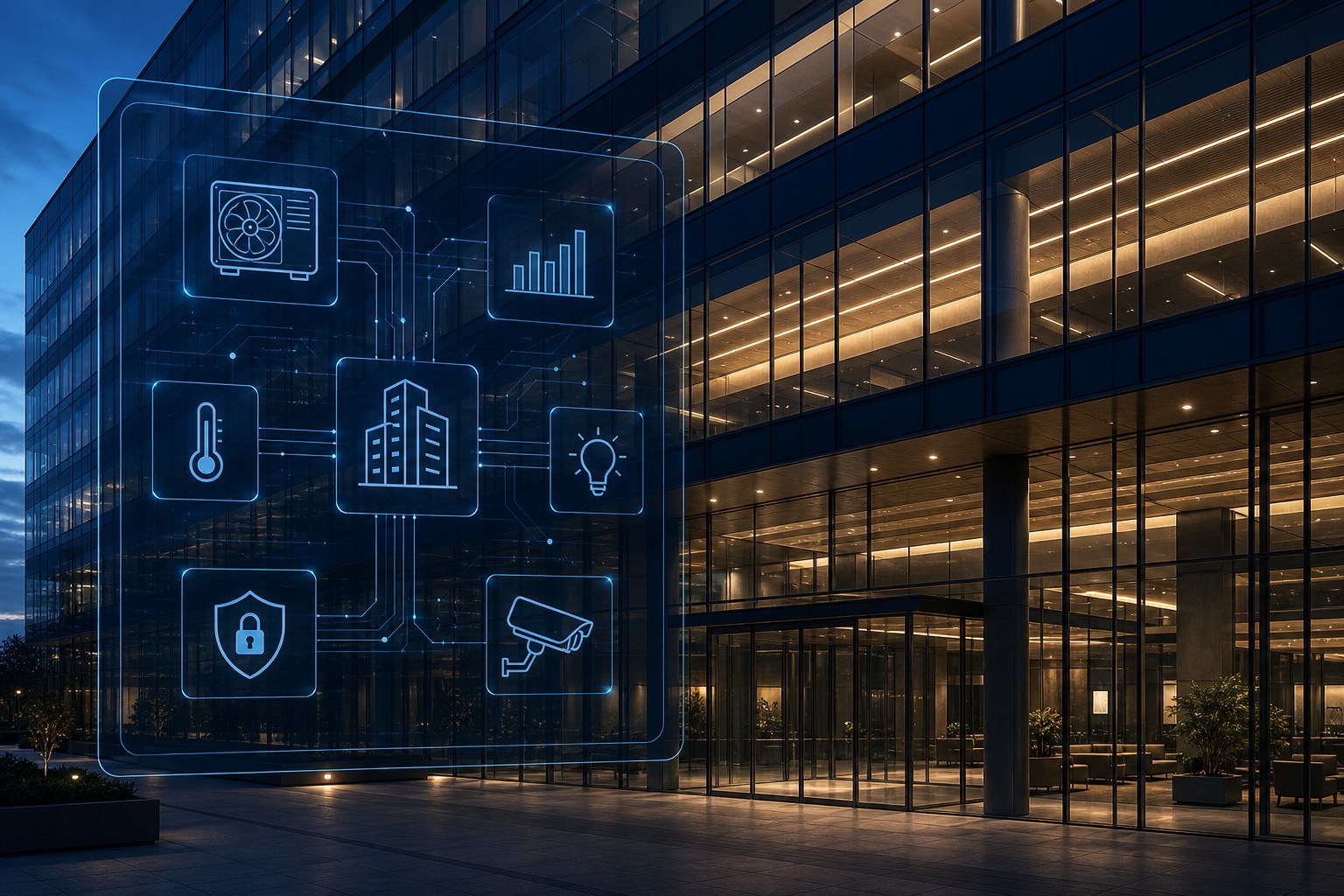
Integrating every building system into one platform. HVAC, lighting, energy, security, and other systems are no longer monitored separately by different teams — everything is read from one place.
Using IoT, sensors, and data analytics. Occupancy, temperature, humidity, and energy sensors stream data continuously, which is then analysed to find patterns and deviations that manual inspection can't catch.
Real-time monitoring and control. Building conditions are visible as they happen, not through a weekly or monthly report — so deviations can be addressed before they grow.
Automation to improve operational efficiency. Once a building's normal pattern is known, the system can take routine action automatically — adjusting cooling to actual occupancy, for example — without waiting for a manual instruction every time.
Main Components of a Smart Building System
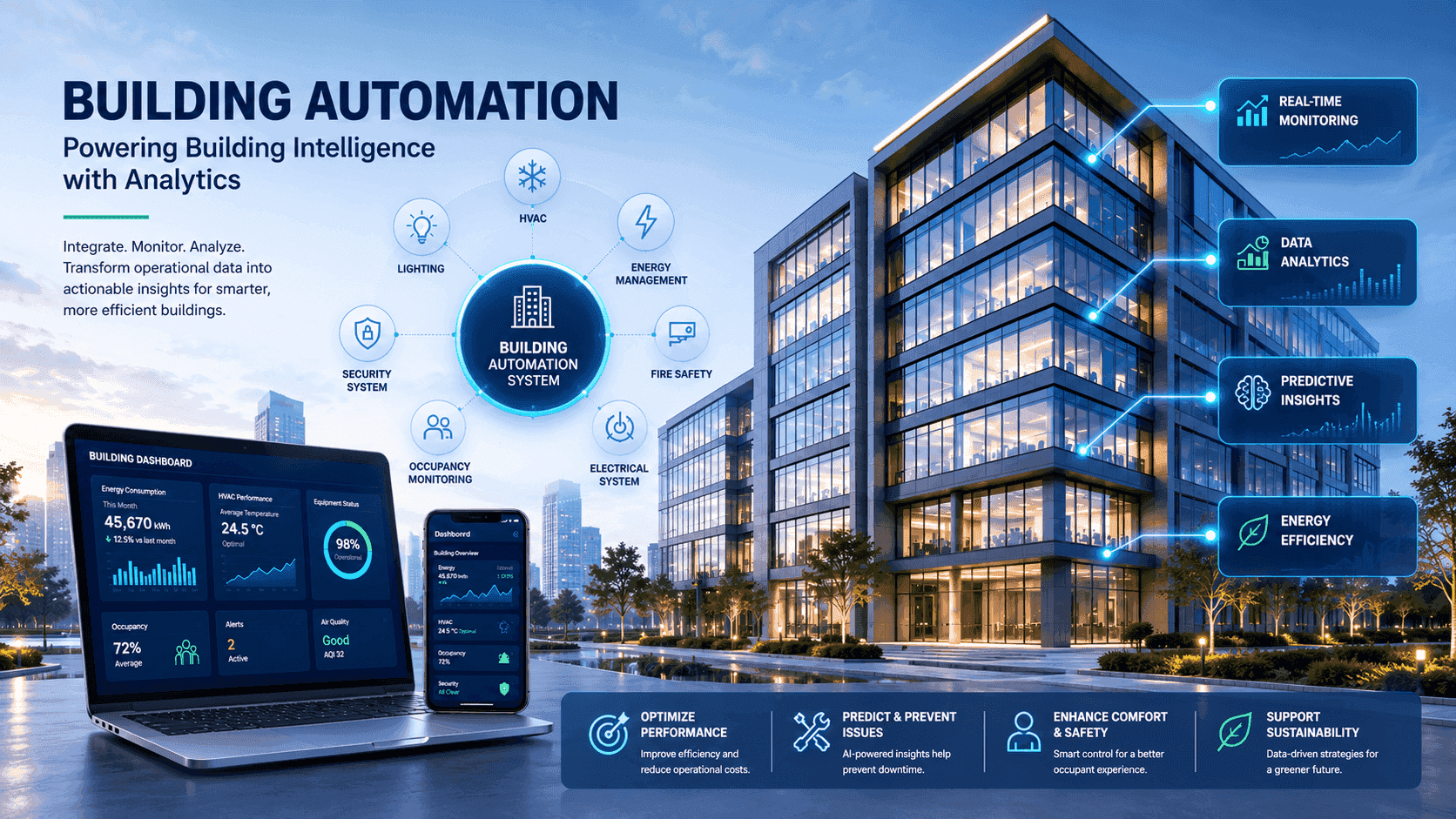
A complete smart building system typically connects seven components:
- Building Management System (BMS) — the control hub that collects signals from every building system and executes operational commands.
- Energy Management — per-zone electricity consumption monitoring and waste identification.
- HVAC Optimization — automated control of chillers, AHUs, and cooling based on real occupancy.
- Lighting Control — scheduling and occupancy sensors for lighting.
- Security & Access Control — CCTV and zone-based access control, connected to other systems.
- Environmental Monitoring — indoor air quality tracking.
- Water Management — detecting leaks and tracking water consumption.
The BMS acts as the control hub, but a true smart building only comes together once the other six components are connected to it and working from the same data.
Benefits of a Smart Building System
Reduced energy consumption. Once the system knows when a space is genuinely occupied, the building stops cooling or lighting empty areas. One low-rise office building in Jakarta recorded a 24.4% reduction in energy and cost with this approach, including a 90% drop in energy spent on unoccupied space — without any loss of comfort.
Improved occupant comfort and productivity. Temperature and lighting automatically adapt to actual room conditions rather than following a fixed schedule.
Easier monitoring and maintenance. Historical data enables predictive maintenance — catching early signs of failure before equipment actually breaks down, instead of waiting for a breakdown report.
Stronger building security. Access control and CCTV connected to other systems speed up response during emergencies.
Supports sustainability and green building targets. Because building performance is recorded continuously, evidence for Greenship certification or ESG reporting comes from the same data that runs the building day to day — not a separate data-collection project every time it's needed.
Challenges in Implementing a Smart Building
Integrating with legacy systems. Most buildings in Indonesia already have a BAS, chillers, or electrical panels that work fine. A solution that requires full replacement adds unnecessary cost and risk — the right approach reads and enhances what's already there, via protocols like Modbus RTU/TCP, Zigbee, or a gateway, rather than replacing it.
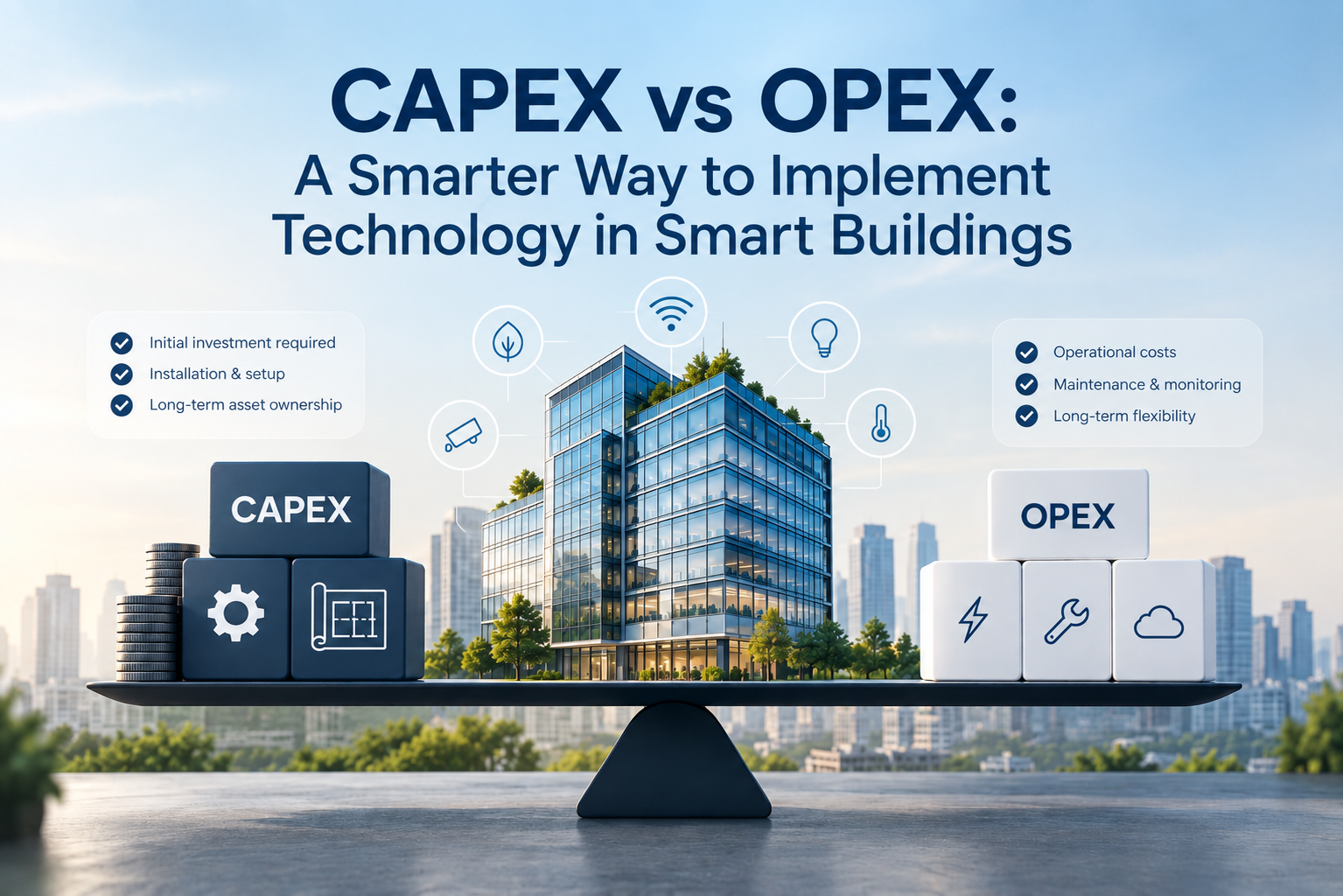
Investment and implementation planning. Investment in building digitalisation often has to compete with other capital projects across the organisation, making it harder to secure funding. A Smart Building as a Service (SBaaS) subscription model with no upfront investment changes that approval conversation, since it doesn't demand a large commitment upfront.
Data and network security. The more connected devices there are, the more encryption and access management matter — this needs to be planned from the start, not added later.
The importance of choosing a flexible, scalable solution. A good implementation doesn't force a building to adopt every component at once. Start with the one or two systems with the largest impact, prove the value, then expand — not a single big project that has to finish all at once or not at all.
Conclusion
A smart building is not just automation — it's an ecosystem that connects every building system so operations become more efficient, secure, and sustainable. Ferbos' smart building solution, through the Continuum platform, supports building digitalisation via monitoring, automation, and data-driven optimisation, whether a building has no BAS yet or wants to enhance a system that's already running.
Frequently Asked Questions
What is a smart building?
A smart building is a building equipped with sensors and a digital platform, so its operational conditions — energy, temperature, occupancy, security — can be monitored in real time and acted on based on data, rather than assumptions or a fixed schedule.
What are the main components of a smart building system?
Typically seven: Building Management System (BMS), Energy Management, HVAC Optimization, Lighting Control, Security & Access Control, Environmental Monitoring, and Water Management.
How does a smart building system help save energy?
By connecting occupancy and room-condition data across systems, a building stops serving empty spaces. Real deployments have recorded 24.4% energy and cost savings at an office building.
Can an old building be converted into a smart building?
Yes. Retrofits are the most common case in Indonesia, since existing buildings are where the energy waste has already accumulated. A good solution reads the existing BAS rather than requiring replacement, major rewiring, or operational downtime.
Start Where It Matters
A smarter building doesn’t mean replacing everything. It starts with understanding what you already have and identifying where digitalization can make the biggest impact.
Talk to our team to find the right next step for your building.