
Introduction
Electrical fires rarely come out of nowhere. Long before a flame appears, there is usually a joint that has been running hot for weeks, a breaker carrying more than its rating, or cable insulation quietly turning brittle. In Jakarta, the fire and rescue service's records have named electrical short circuits as the leading cause of fires year after year, in commercial buildings and industrial sites alike.
So how do you prevent an electrical short circuit before it turns into a fire? The answer is catching abnormal conditions early. That is the job of a Thermal & Power Monitoring System: it watches temperature and electrical conditions in real time, so the facility team knows something is wrong well before anyone smells smoke.
What Is a Thermal & Power Monitoring System?
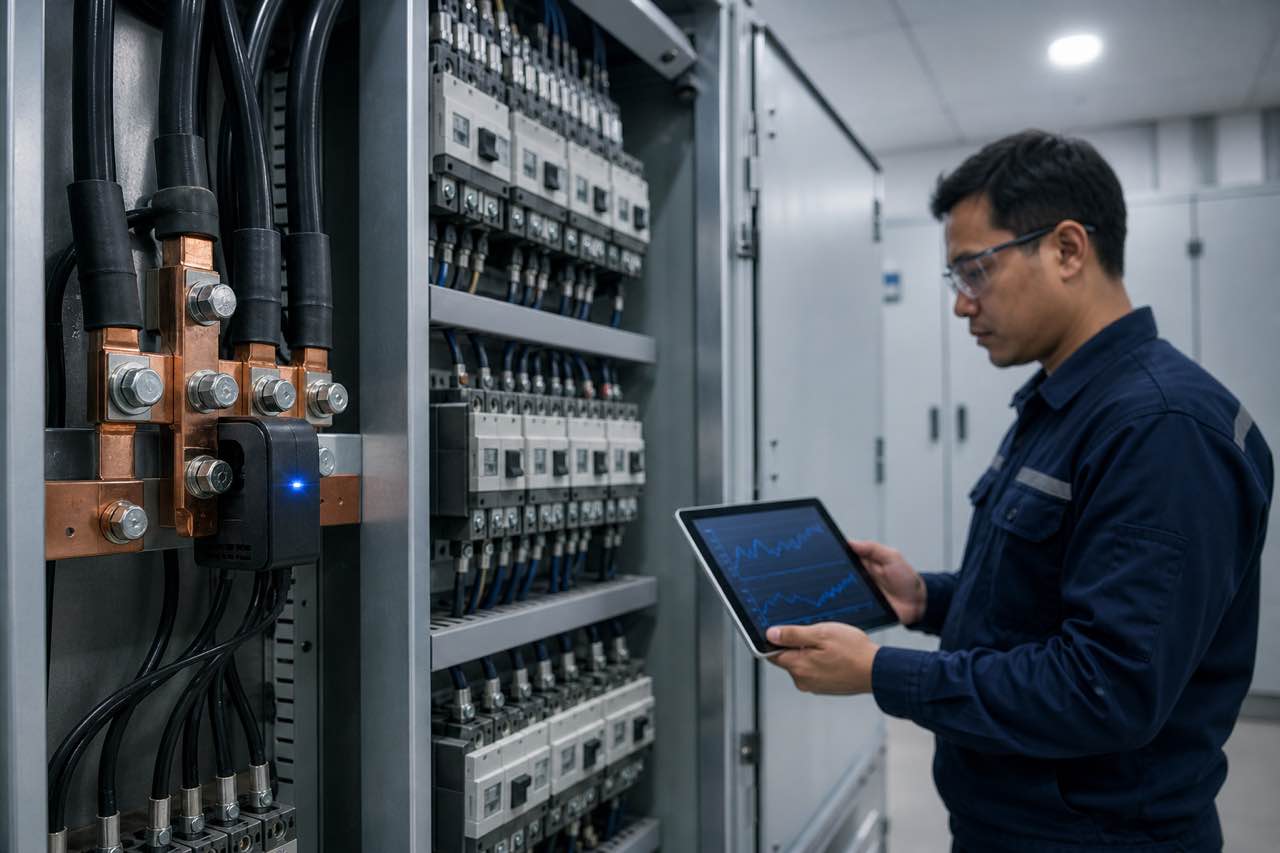
Thermal monitoring means continuously tracking the temperature of electrical components with sensors placed at known hot spots, such as cable terminals, busbars, and breakers. Power monitoring means measuring electrical quantities through power meters installed in the panel.
Typical parameters include:
- Temperature: terminals, cable joints, busbars, breakers, and the air inside the panel.
- Current on each phase, to spot overloads and imbalance between phases.
- Voltage, including sags and swells.
- Power and power factor, which show how loads draw electricity.
- Harmonics, waveform distortion that adds heat to cables and transformers.
The two data sets work together. Temperature shows where heat is building up, and electrical data explains why.
How Temperature Relates to Electrical Faults
Almost every electrical fault leaves a heat signature. Cables, panels, breakers, and joints warm up when current exceeds what they were sized for, or when resistance appears where it should not.
The two most common causes of overheating:
- Overload. Equipment gets added without recalculating capacity, so cables and breakers work far harder than designed.
- Loose connections. Terminal bolts loosened by vibration or repeated heating and cooling raise resistance at one small point, and that point can get very hot even while total load looks normal.
Temperature change is an early warning because insulation ages faster when it is hot. A widely used rule of thumb in electrical insulation says that every rise of roughly 10 °C in operating temperature can cut insulation life by about half. Brittle insulation is where a short circuit begins.
How the System Detects Fire Risk
- Sensors never stop watching. Temperature sensors and power meters read panel conditions every few seconds or minutes, including nights and weekends when no technician is on site.
- Data is collected and analysed. Readings flow to a central platform, are compared with normal patterns, and temperature rise is checked against the load at that moment.
- Alerts fire when safe limits are crossed. For example, when one terminal runs much hotter than its counterparts on the other phases, or when current approaches the breaker rating.
- Managers act early. The team can tighten a joint, shift load, or schedule a repair before the damage spreads.
Annual infrared thermography, as recommended in the NFPA 70B electrical maintenance guidance, still matters. But an inspection captures one day a year; continuous monitoring covers the other 364.
Benefits of a Thermal & Power Monitoring System
- Early detection of developing electrical faults, from abnormal heat to unbalanced current.
- Overheating stopped before insulation fails, which makes it a measurable way to prevent fires caused by short circuits.
- Safer installations, because every change in condition is logged and traceable.
- Easier oversight from one dashboard, without opening panels one by one.
- Support for predictive maintenance and less downtime. Panel temperature data pairs naturally with machine condition tracking such as Equipment Health Monitoring.
Monitoring complements, rather than replaces, the other safety basics: an installation built to the national wiring code (PUIL), correctly sized protection, and routine checks by certified technicians.
Where It Applies in Buildings and Industrial Sites
How to prevent electrical short circuits varies from site to site, but the points worth monitoring tend to be similar:
- Electrical panels and switchgear: where the largest loads meet, and where loose connections turn up most often.
- Data centres: loads run around the clock, so a small fault hits service immediately.
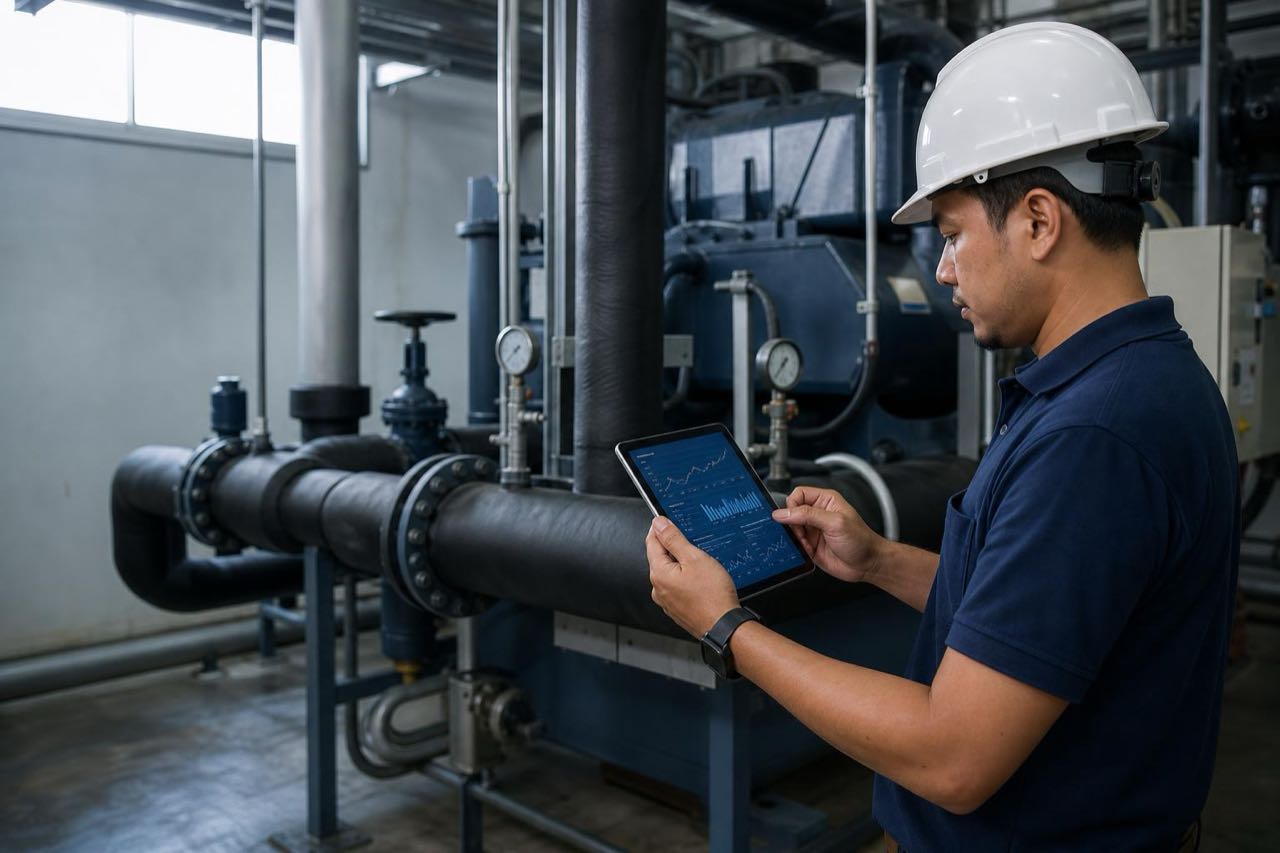
- Factories and manufacturing plants: motors, compressors, and production machines draw heavy current and vibrate connections loose. See the typical challenges in manufacturing.
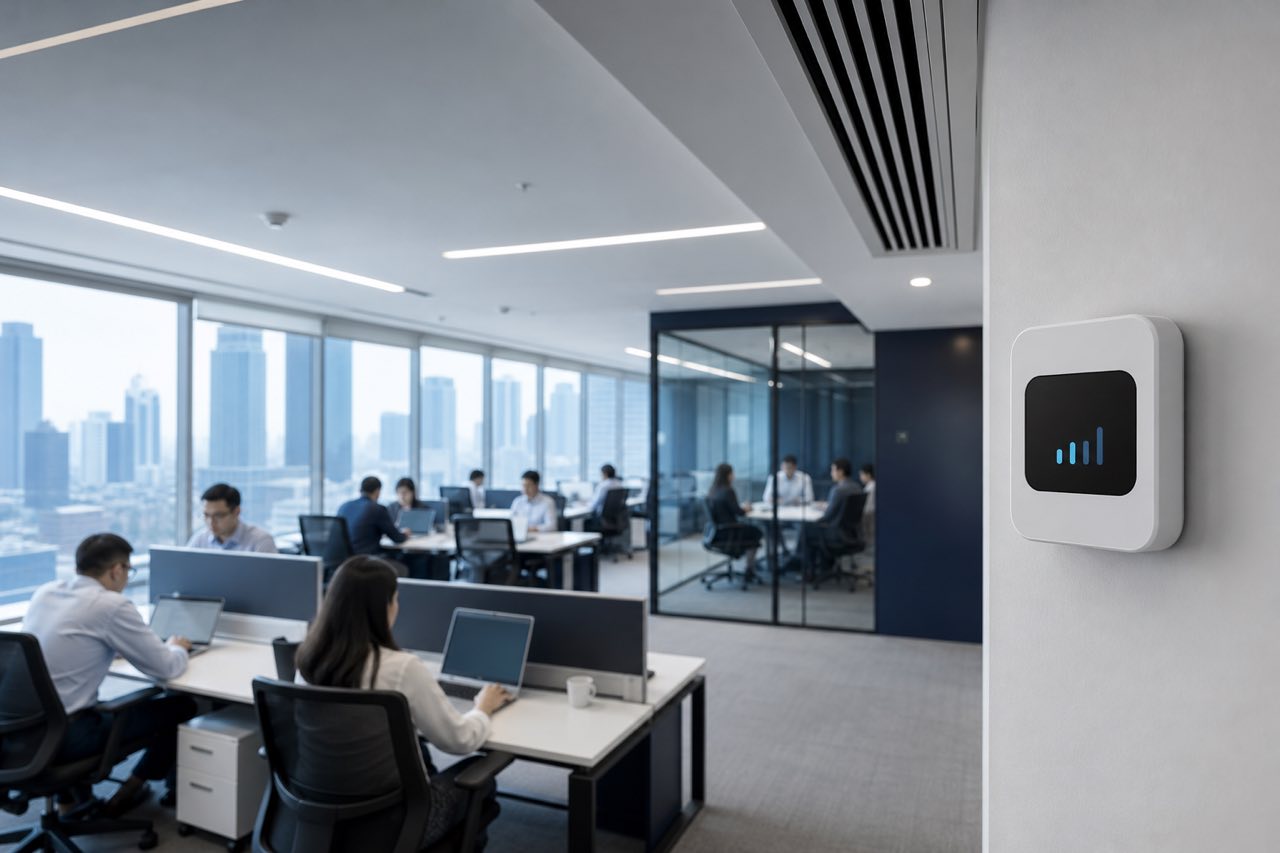
- Offices and commercial buildings: tenant load additions often go unrecorded at the panel.
- Warehouses and storage facilities: large areas with few people, so excess heat can go unnoticed for a long time.
FAQ
Can thermal monitoring detect a cable that is overheating?
Yes, provided sensors sit at the right points, such as terminals, joints, or crowded cable routes. The system reads the temperature rise and compares it with the load and with similar points.
Which electrical parameters can a power monitoring system track?
Usually current, voltage, power, energy, power factor, frequency, and harmonics. Electricity monitoring such as Ferbos Energy Management also raises alerts for electrical issues.
Can the system raise an alarm when conditions turn abnormal?
It can. Thresholds are set per point, and alerts go to the team through the dashboard, email, or messaging once a limit is crossed.
Can a Thermal & Power Monitoring System integrate with building monitoring?
Yes. Temperature and electrical data can feed a BMS or a building automation platform, so the facility team sees everything in one place.
Can monitoring reduce the risk of downtime caused by electrical faults?
Yes. Problems caught early can be fixed on a planned schedule, not after a machine or a building has already stopped.
Short circuits and overheating are serious threats to the safety of any building or plant, but they almost always give warning first. The most dependable way to prevent an electrical short circuit is to catch that warning: a Thermal & Power Monitoring System picks up changes in temperature and electrical conditions far sooner than manual inspection, and supports preventive maintenance and safer operations.
Ferbos helps through Continuum, an intelligence platform that reads data from the systems already in place, whether BAS/BMS, PLC, or SCADA, without replacing them. Where a building has no readable sensors, Ferbos installs the sensor layer from scratch.
Want to find the weak points in your electrical installation? Book a free site assessment with Ferbos.