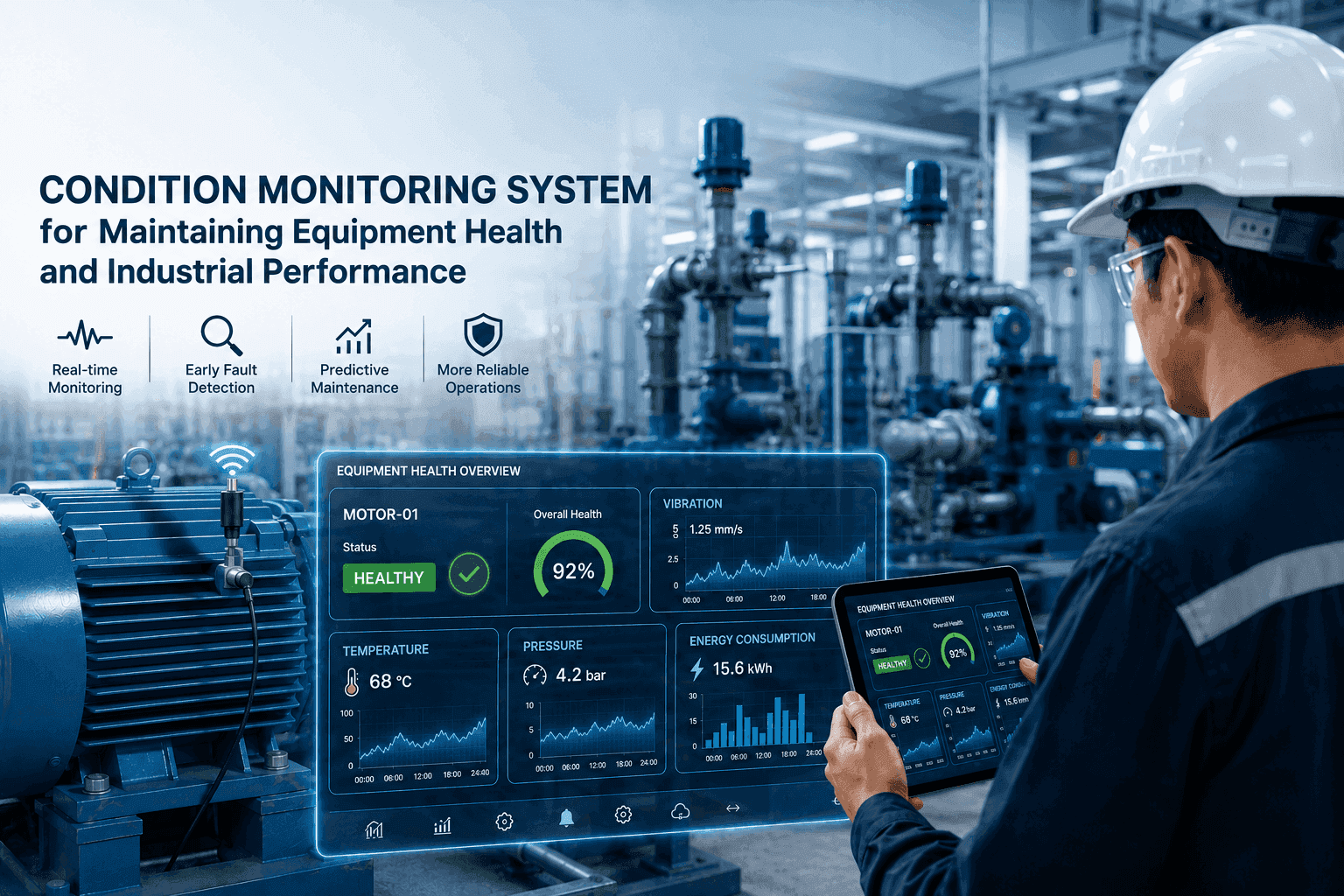

Condition Monitoring System for Maintaining Industrial Equipment Health and Performance
In today’s industrial landscape, ensuring equipment reliability and performance is vital to maintaining operational efficiency. Unexpected failures can cause costly downtime, disrupt production, and increase maintenance expenses.
To overcome these challenges, many organizations are implementing condition monitoring systems as part of a proactive maintenance approach. Leveraging real-time data and smart sensors provides visibility into equipment health and helps detect issues before they escalate into costly failures.
What is Condition Monitoring?
Many industrial professionals often ask, condition monitoring is a continuous process of monitoring equipment conditions to assess asset health and detect early signs of failure.
Simply put, condition monitoring involves collecting and analyzing operational data from industrial equipment. This data helps identify performance deviations that may indicate wear, degradation, or developing faults.
The primary goal of condition monitoring is to enable organizations to move from reactive maintenance practices toward condition-based and predictive maintenance strategies.
Unlike traditional maintenance approaches that rely on fixed schedules, a condition monitoring system allows maintenance activities to be performed based on the actual condition of equipment. This improves maintenance efficiency and reduces unnecessary interventions.
How a Condition Monitoring System Works
A modern condition monitoring system typically consists of sensors, communication networks, and data analytics platforms working together to provide continuous equipment visibility.
1. Data Collection Through Sensors
Sensors are installed on equipment to capture operational data in real time. This information serves as the foundation for monitoring asset health.
2. Monitoring Key Performance Parameters
Common parameters monitored through condition monitoring include:
- Vibration
- Temperature
- Pressure
- Electrical current and voltage
- Energy consumption
- Rotational speed
Changes in these parameters often provide early warning signs of equipment deterioration or malfunction.
3. Data Analysis and Early Fault Detection
The collected data is processed through analytics software and monitoring dashboards. When abnormal patterns or deviations are detected, alerts can be generated to notify maintenance teams.
This proactive approach enables organizations to address issues before they escalate into major failures and operational disruptions.
Benefits of Condition Monitoring for Industry
Implementing condition monitoring provides significant advantages for facilities that rely on critical assets and equipment.
1. Reduced Unplanned Downtime
One of the key benefits of condition monitoring is its ability to detect developing problems before they cause equipment failure, helping organizations minimize unexpected downtime.
2. Extended Equipment Lifespan
Continuous monitoring enables maintenance teams to perform timely interventions, reducing wear and extending asset life.
3. Lower Maintenance and Repair Costs
By identifying issues early, companies can avoid costly emergency repairs and reduce the need for premature component replacements.
4. Improved Operational Safety
Operating equipment under abnormal conditions can pose safety hazards. A condition monitoring system enables early detection of these risks, fostering a safer workplace.
Applications of Condition Monitoring Systems
Today, condition monitoring systems are widely used across various industrial sectors to monitor critical assets and infrastructure.
Common applications include:
- Electric motors
- Industrial pumps
- Air compressors
- Chillers
- Air Handling Units (AHU)
- Cooling towers
- Generators
- HVAC systems
- Other mission-critical equipment
With the advancement of IoT technology, condition monitoring can now be performed remotely through integrated digital dashboards that provide real-time visibility into asset performance.
To support data-driven maintenance strategies, Ferbos offers Equipment Health Monitoring solutions that enable continuous asset monitoring and early fault detection. This helps organizations implement a more proactive and efficient maintenance approach.
Conclusion
Condition monitoring is a modern maintenance approach that enables organizations to continuously assess equipment health and detect potential failures before they impact operations.
By implementing a condition monitoring system, companies can reduce unplanned downtime, extend equipment lifespan, lower maintenance costs, and improve workplace safety. More importantly, condition monitoring supports the transition from reactive maintenance to predictive maintenance, creating more efficient, reliable, and sustainable industrial operations.
Take the first step toward smarter asset management with Ferbos Equipment Health Monitoring solutions.
Contact our team today to discover how real-time condition monitoring can improve operational reliability, efficiency, and long-term sustainability.