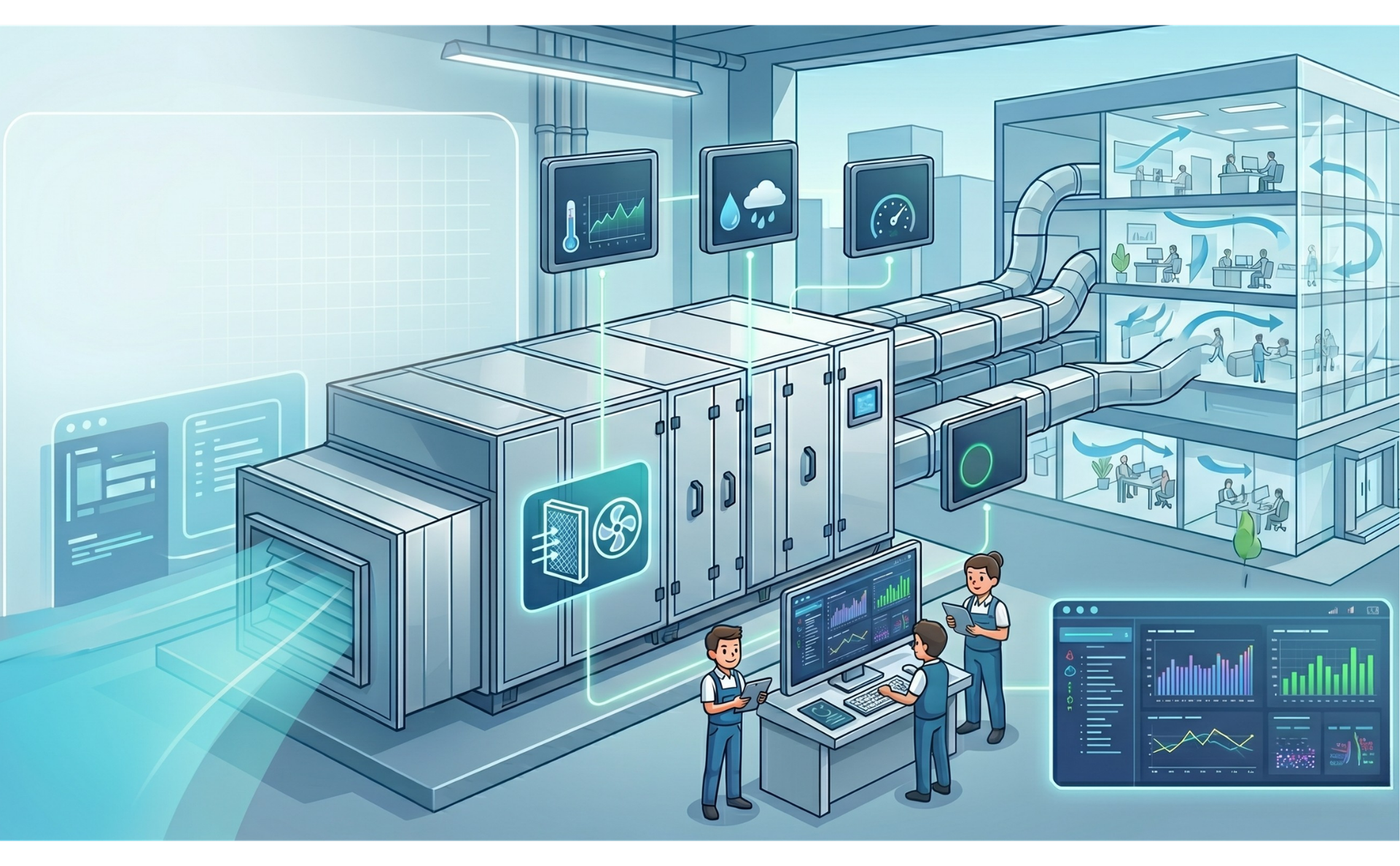

AHU Monitoring and AHU Control System for Building AHU System Optimization
In the modern architectural era, building occupant comfort is determined not only by aesthetic design but also by indoor air quality (IAQ) and energy efficiency. HVAC (Heating, Ventilation, and Air Conditioning) systems play a crucial role, with the ahu system (Air Handling Unit) acting as the heart of this air circulation. Without proper management, HVAC operations can become the largest source of energy waste in a building. Therefore, the implementation of technologies such as ahu monitoring and AHU Control System is now a new standard in facility management. With strict supervision and automated control, building managers can ensure air flow remains optimal while significantly reducing operational costs.
What is an AHU System?
Technically, an ahu system or Air Handling Unit is a large device used to regulate and circulate air as part of an HVAC system. Its main function is to take in outdoor air, filter it, adjust its temperature and humidity, and then distribute it throughout the building via ductwork.
Key components working within this unit include:
- Fan: The primary mover to circulate the air.
- Filter: Removes dust particles and impurities to keep the air clean.
- Cooling Coil: Cools the air before distribution.
- Sensors: Measure parameters such as temperature, pressure, and air quality.
The Importance of Real-Time AHU Monitoring
Why is ahu monitoring so essential? Without continuous oversight, minor malfunctions often go
undetected until fatal damage occurs. With data-based monitoring, managers can view unit performance in real-time through digital dashboards.
The primary benefit of this monitoring is the early detection of performance degradation. For instance, if a sensor detects an increase in filter pressure, the system will issue an alert indicating the filter needs cleaning. This prevents the ahu system from overworking, which typically leads to wasted electricity and inconsistent indoor temperatures.
Understanding AHU Control System and Automation
If monitoring acts as the "eyes," then the AHU Control System is the "brain" of HVAC operations. This control system is responsible for automatically regulating vital variables such as fan speed, cooling valve opening, and humidity levels based on the actual needs of the space.
With an integrated AHU Control System, buildings no longer rely on wasteful static settings. The system adjusts the workload dynamically for example, reducing the air supply when building occupancy is low. Digital sensor integration ensures every corner of the building receives uniform air quality with the most efficient energy use.
Optimizing AHU Systems with Modern Technology
The transformation toward smart buildings requires optimization of every mechanical component. Modern technology enables preventive maintenance. Through data collected from ahu monitoring, technical teams can predict when a component might fail before it actually happens.
As an experienced technical solution provider, Ferbos offers ahu system optimization services designed to enhance your building's long-term performance. We integrate sensory hardware with smart monitoring systems to ensure your HVAC operates at its highest efficiency point.
Conclusion
Implementing ahu monitoring and AHU Control System is no longer just an option but a necessity for sustainable building management. With this technology, you not only improve comfort for occupants but also achieve energy cost savings that positively impact operational profitability.
Ensure the ahu system in your building is managed by the right experts for maximum results and freedom from costly technical disruptions.
Ready to Enhance Your Building Efficiency?
Optimize your HVAC performance now with the experts. Contact the Ferbos team for a consultation on the right AHU Control System and monitoring solutions for your business needs.