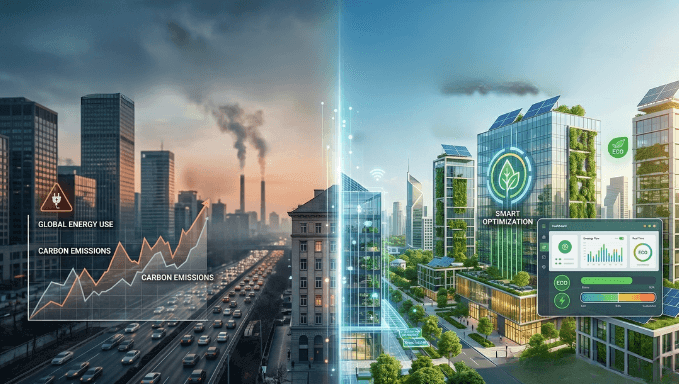

In today’s modern technological landscape, the Internet of Things (IoT) has become a key pillar in connecting physical devices with digital systems.
IoT enables real-time data exchange, process automation, and improved efficiency across various sectors.
For example, in the energy industry, IoT allows detailed monitoring of electricity consumption, optimizes power usage, and even automates control of devices such as air conditioners, pumps, and water heaters.
Want to learn more about IoT? Read on.
What Is the Internet of Things (IoT)?
The Internet of Things (IoT) is a concept that describes a network of interconnected physical devices capable of sharing data with each other over the internet.
These devices range from simple sensors to complex electronic systems. By communicating with one another, they help improve efficiency and enhance user experience.
IoT in Energy Monitoring and Automation
In the context of energy management, IoT enables:
- Real-time data collection from power sources
- Continuous monitoring and early warning alerts
- Data transmission to servers for advanced analysis and energy optimization
IoT systems can also integrate:
- Environmental sensors
- Human presence sensors
- Indoor Air Quality (IAQ) sensors
This combination helps understand occupant behavior, allowing systems to automatically adjust settings for optimal comfort and energy efficiency.
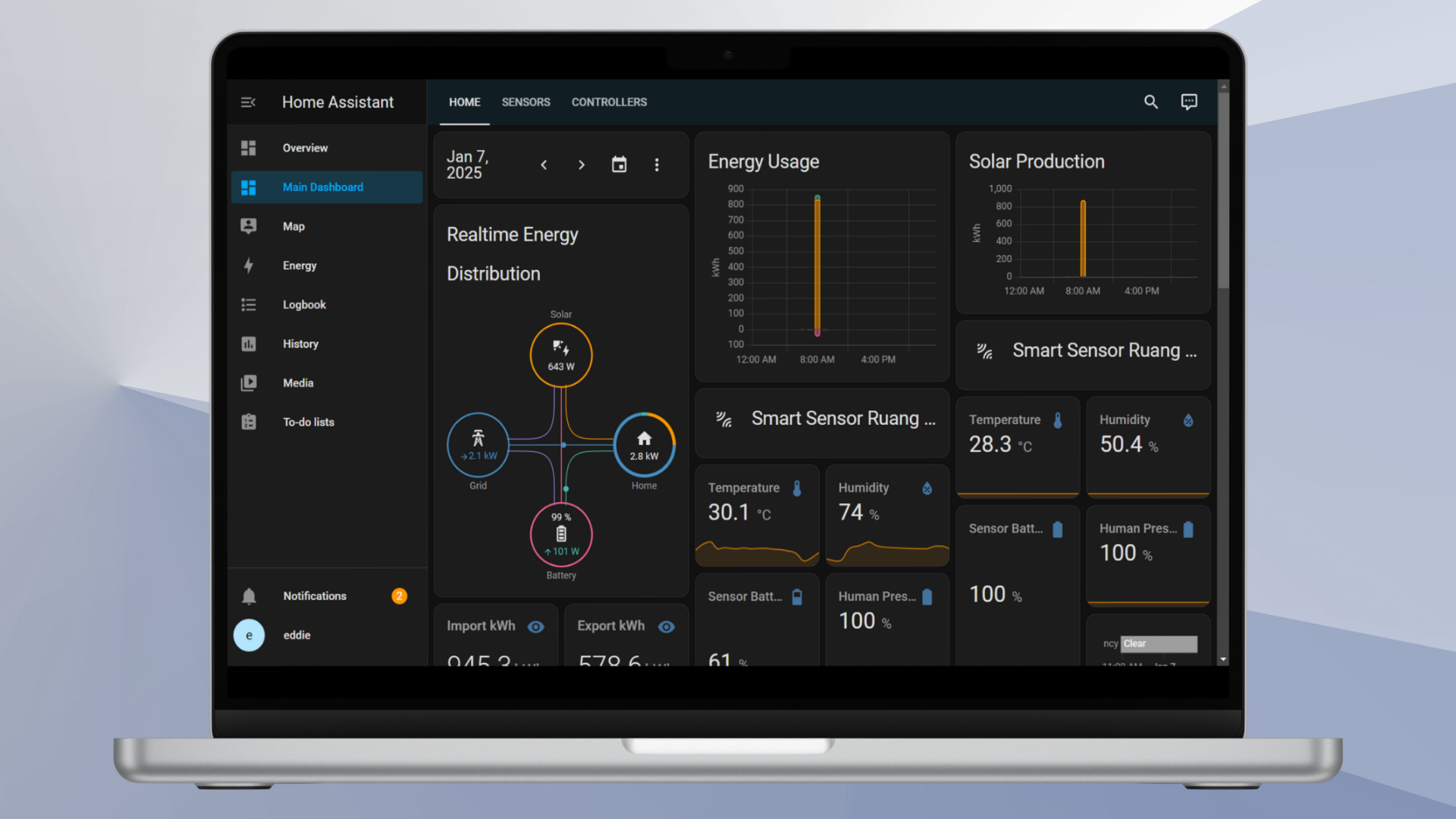
With IoT, energy consumption can be monitored via web-based dashboards or mobile apps, complete with real-time notifications. Devices such as air conditioners, pumps, and water heaters can also be controlled remotely using IR remotes and smart plugs, significantly improving efficiency and convenience.
How IoT Works
IoT works by connecting physical devices to the internet, allowing them to collect, transmit, and process data without direct human intervention.
Key Stages of an IoT System
-
Data Collection
Sensors capture environmental data such as temperature, humidity, motion, or power usage. -
Data Transmission
The collected data is sent via communication protocols like Wi-Fi, Bluetooth, or Zigbee to a central system. -
Data Processing and Analysis
The central system analyzes the data to identify patterns, anomalies, or actionable insights. -
User Interface and Control
Processed data is displayed through applications or dashboards, enabling real-time monitoring and control. -
Automated Actions
Based on predefined rules, the system can take automatic actions.
Example: If room temperature exceeds a set threshold, the air conditioner turns on automatically.
Through this continuous cycle, IoT creates an intelligent ecosystem where devices communicate and operate autonomously.
Benefits of IoT
IoT delivers significant advantages across industries and daily life.
1. Increased Efficiency and Productivity
Automated data exchange reduces manual processes, improving operational efficiency—especially in business environments.
2. Automation and Remote Control
Users can control devices remotely via smartphones, increasing comfort and enabling faster responses to daily needs.
3. Enhanced Security
IoT strengthens security through:
- Early threat detection
- Automated monitoring
- Real-time alerts
Integrated sensors can detect unusual activity and trigger immediate responses.
4. Energy Savings
By monitoring power usage in real time, IoT systems can optimize energy consumption, reduce waste, and support environmentally friendly practices.
5. Efficient Operational Management
In business operations, IoT supports:
- Inventory automation
- Shipment tracking
- Fuel and asset management
This results in smoother workflows and fewer operational errors.
Examples of IoT Applications
IoT solutions are now widely implemented across industries. Common examples include:
1. IoT for Energy Monitoring Systems
Real-time energy monitoring systems help identify excessive electricity usage and optimize consumption. These systems can integrate with:
- Direct Measurement Energy Meters
- CT Measurement Energy Meters
2. Environmental Sensors
Environmental sensors monitor:
- Temperature
- Humidity
- Indoor Air Quality (IAQ)
Based on this data, HVAC systems can automatically adjust for optimal comfort.
3. Human Presence Sensors
Passive Infrared (PIR) sensors detect occupancy and activate or deactivate devices accordingly.
This helps save energy by turning off lights or air conditioners when rooms are unoccupied.
Ferbos Kreasi Digital: IoT Solutions for Energy Efficiency and Automation
Implementing IoT requires careful planning. Improper installation or system design can result in unstable connectivity and increased energy waste.
Ferbos Kreasi Digital provides end-to-end IoT solutions for monitoring and automation, ensuring efficiency and savings across various sectors. All devices are integrated into an interactive dashboard with real-time access and notifications.
Advanced Technologies Used by Ferbos
Edge Computing
Edge computing processes data closer to the device source, reducing cloud dependency and enabling faster system responses. This is critical for real-time applications such as security systems and health monitoring.
Artificial Intelligence (AI)
AI enhances IoT systems by enabling:
- Predictive analytics
- Usage pattern recognition
- Predictive maintenance
- Automated energy optimization
By combining IoT, AI, and edge computing, Ferbos pioneers smarter, more adaptive, and energy-efficient solutions for businesses and households.